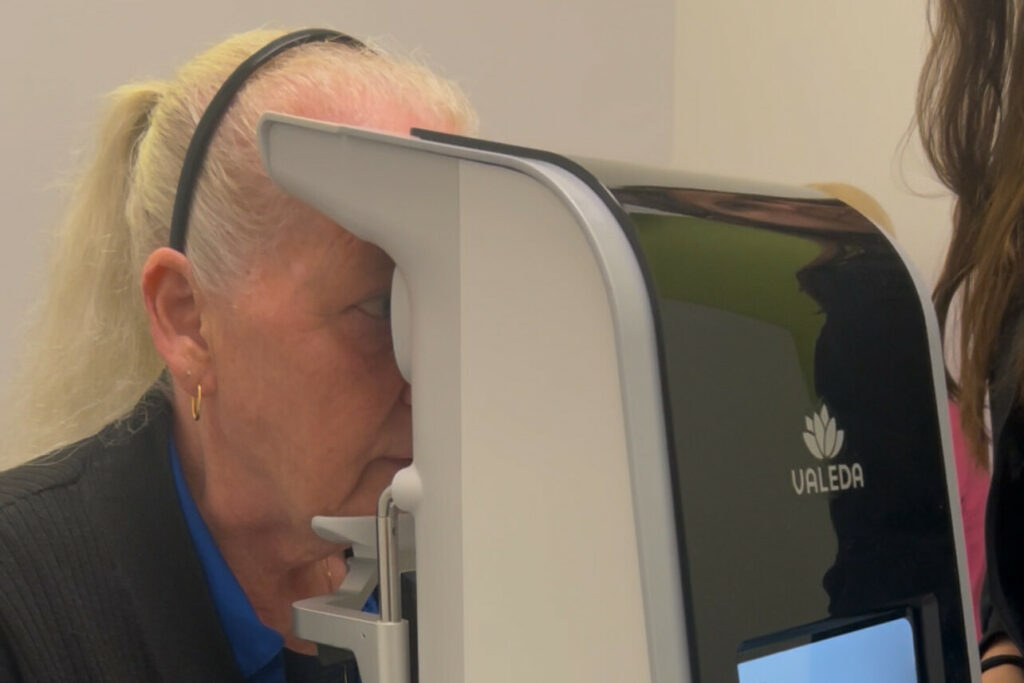


For most people with early or intermediate dry AMD, treatment used to mean taking eye vitamins and coming in for regular checkups to see whether their vision had slipped. Now, patients have the opportunity to do something more.
Valeda is an FDA-authorized light therapy that shines gentle, low-level light into the eye to support the retinal cells that dry AMD slowly wears down. The goal is to help patients hold on to, and in some cases sharpen, the detailed central vision they rely on for reading and other close work. The treatment works over a series of short sessions, usually nine, over three to five weeks, then return every few months for another round, adding up to about 54 sessions over two years.
Keep reading to learn more about Valdea and what to expect with treatment!
What Happens During One Treatment Course

A single Valeda course consists of nine short sessions, usually scheduled two or three times per week until all nine are complete. Most patients finish a course in three to five weeks, depending on how their appointments line up with their calendar.
Valeda treats dry age-related macular degeneration with specific wavelengths of light that help weakened retinal cells produce energy more efficiently. The light may also improve blood flow to the back of the eye. These effects build with repetition. One session delivers a small amount of light energy, and grouping nine sessions within a few weeks gives the retina a steady series of treatments.
Each Valeda session is brief and typically takes only a few minutes per eye. You sit comfortably, rest your head against the device, and look into it while it delivers a sequence of light. Some patients notice brightness or a gentle pulsing, but the treatment is painless.
There are no injections and no dilating drops, so you won’t leave with blurry, light-sensitive vision. Most people head straight back to their normal routine, which makes it much easier to fit several visits into a single week.
Why One Course Is Usually Not the Whole Plan
Many patients assume that treatment is complete once they finish nine sessions. However, dry AMD is a chronic, progressive condition. The retinal cells it affects continue to age and face stress long after a course ends, and the support that light therapy provides can gradually wear off.
Repeat courses address that. After the first course, patients return every few months to complete another set of nine sessions. Over roughly two years, that pattern adds up to six courses and 54 sessions. The gaps between courses give you long stretches without frequent appointments, so the schedule feels less demanding than the total number suggests. For most of the year, you live your normal life, and a few weeks of regular visits return a handful of times.
What Can Shift Your Personal Schedule

The six-course plan is the standard framework, but your own experience may look a little different. The eye doctors at Loden Vision Centers consider several factors when they build and adjust a treatment plan:
- The Stage of Your AMD: Valeda is intended for early to intermediate dry AMD. Your doctor will confirm that your condition falls in this range and track whether it changes during treatment.
- Whether One or Both Eyes Need Treatment: Many patients have dry AMD in both eyes and receive treatment for each during the same visit, while others need care in only one eye. This affects how long each session lasts.
- How Your Eyes Respond Over Time: Vision testing and retinal imaging between courses show how you are progressing and help guide what comes next.
- Changes in Your Overall Eye Health: If dry AMD progresses to the wet form, which involves abnormal blood vessel growth beneath the retina, your care plan would shift to address that condition directly.
Regular check-ins between courses also give your doctor a chance to catch other age-related eye changes that often appear alongside macular degeneration.
Fitting Treatment Into Everyday Life
Nine visits in a few weeks is a real commitment, especially for patients who rely on family members for rides or who juggle other medical appointments.
Loden Vision Centers has multiple locations across Middle and West Tennessee, so many patients can complete their sessions close to home. Choosing the most convenient office before the first course starts makes the whole schedule easier to keep.
It also helps to look at your calendar ahead of time. If you block out a few weeks for each course and plan travel or other procedures around those windows, the treatment schedule won’t collide with the rest of your life.
Insurance coverage for Valeda varies, and the team can walk you through your benefits and payment options before treatment begins.
Turning the Standard Plan Into Your Plan

General guidelines offer a helpful starting point, but your actual schedule depends on what your doctor sees during a full evaluation.
That visit typically includes vision testing and detailed imaging of the retina to confirm the type and stage of your macular degeneration. From there, your doctor can explain whether Valeda makes sense for you, how many courses they recommend, and what follow-up will look like between them.
Dry AMD can feel like a condition that simply happens to you. A clear, week-by-week plan gives many patients a sense of control again. It also keeps attention on the moments you want to protect, like reading a favorite book or recognizing a grandchild’s face across the room.
Want to know what a Valeda treatment schedule would look like for your eyes? Schedule an appointment at Loden Vision Centers in Nashville, TN, and get a plan built around your AMD.